

A FUTURE OF UNMANNED SHIPS

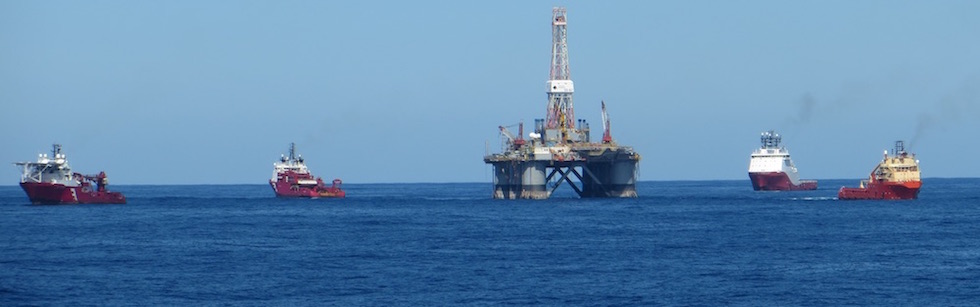
A photo of an unmanned ship by Rolls Royce, used as an illustration on the BBC news item
Every now and again some-one comes up with the idea of unmanned ships, however in the past it has never seemed like a really good idea because the oceans are not empty. There are many thousands of ships plying the oceans as they carry most of the worlds trade from one place to another. But maybe what has changed is the ability of people to be in one place and seem to be in another.
There are now aircraft flying about in the skies above Afghanistan and Yemen, having taken off from somewhere handy and being controlled by pilots in America. But even so we should ground ourselves and remember that the planes are not in the air for long, and they are maintained on the ground between flights. So even if we can visualize people driving ships with video camera screens, and radar displays in the control room in Huddersfield, ships can be at sea for weeks and lacking engineers, they would be in trouble if they broke down. This because ships on international voyages spend most of their time outside helicopter range. So, I’m not saying it won’t happen, but it won’t happen just yet, because ships are not yet sufficiently reliable.
WORDS FROM THE GULF
I was doing some research to improve my information about Gulf of Mexico companies when I discovered this interesting exchange on a marine forum. Some-one had had asked a question about a Golden Meadow company.
Respondent 1. I saw the job ad on the net too but they have no website. That tells me the bubba runnin’ the show is ol’ school. I may apply to this job but will have to do it over the phone. The phone interview is where you either stop or pass go. That is also where you muster your experience and pass the phone test or not. That is if they will even talk to you without you bein’ there "in person" to apply. That is code for stay away yankees. Some jobs are not what they appear or there is ‘coonass navy’ code and tests to pass unless they are in a real bind. The lack of website has ‘coonass navy’ written all over it.
Respondent 2. I gotta ask why would you want to waste your time with the "coonass navy"? Kinda seems as if you have something against the people down the bayou. One would assume that everybody from out of state would understand that local companies want to provide jobs for locals first. Nothing against the out of state guys, a lot of you come to Louisiana and make great captains, deckhands, etc...but as a Louisiana native working in the marine transportation industry, I do get tired of hearing out of state guys do nothing but talk trash about Louisiana and coonasses. I would think that it would be the opposite. If you are from out of state, unless they give you reason to dislike them, try to appreciate the fact that you have a high paying job that is provided for you by the ‘coonass navy’.
Just realize that the ‘coonass navy’ a lot of you out of state guys complain about, are the ones who put food on your family's table. Keep in mind that a guy with just a GED (General Education Development) can't make anywhere near the money that we make offshore in most other places. I like working with people from different parts of the country, but when they start talking about how ignorant coonasses are, or just general trash talking about Louisiana it really upsets me.
The exchange took place in 2010 and the company in question now has a website.
STAR TAURUS

The Navigator in Senegal. Photo Archie Walker
Some time ago I received this photo of an offshore vessel being fixed up in Senegal. The photographer suggested that because he could see the first two letters of the name which were ST, it could be Stad something.
But the ship looked sort of familiar so I read the IMO number and on googling it I found that it had been the Star Taurus. Now I try to avoid too much reminiscing on the website and in this newsletter, but I really can’t help it in this case.
The Star Taurus and its sister ship the Star Aquarius were Star Offshore’s first anchor-handlers and were beasts in their day, much envied by the crews of other British anchor handlers of the time. The two ships entered service in 1974 or so and their first job was trying to protect British fishing vessels during the cod war.
I joined the Taurus in 1982 as an extra hand, and later was master of the Star Aquarius working for Total in 1983. In that year they both departed to work in the Far East, almost never to be seen again. I say almost, because one of them did reappear some years later as a standby boat.
The Aquarius was replaced on the Total charter by the Star Polaris, and despite the fact that the latter was the latest thing in supply boating, and better in every respect the charterers were still angry. So I was going to say ‘gone but not forgotten’ – but actually not even gone.
NAVIGATING THE CHANNEL
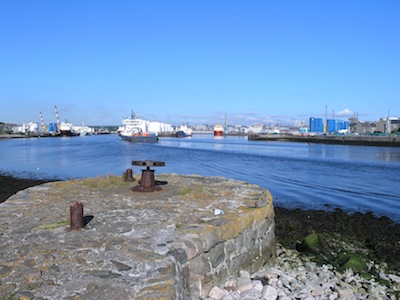
The last remaining captain in Aberdeen Harbour
Some years ago I contributed an article to a book about Aberdeen. Of course I was not a native and so could not reminisce about living in a one room tenement or similar, but I was familiar with the harbour and could see a lone capstan from our office - and actually another lying on the beach close by, so I did some investigating, and this is the result.
On the south side of the entrance to Aberdeen harbour, marking the inner end of the channel, there is a small breakwater projecting northwards, and like a thumb on a right hand, a small mole sprouts from the shoreward end of this breakwater. This curious extremity is topped by a capstan, now rusty and leaning but once a essential part of the harbour navigation system. A visit to the capstan reveals nothing about it, other than the fact that, amazingly, it still turns. So those who are curious about its use have to delve into the history of the port, starting with the old maps of the harbour.
Probably the most famous of the maps is that drawn by Peter May in 1756. He was a surveyor employed by the magistrates of Aberdeen to produce an accurate map of the port, because they mistrusted the previous work. This map shows a large river estuary with islands in the stream, and a cluster of houses on the north shore which was the city. On the south side of the approach to the port there are a number of sticks which might be positioned to guide vessels, and alarmingly the sea outside the port is known on the plan as the German Ocean. There is no sign of any moles or breakwaters, let alone capstans.
Hence one can assume that back in 1756 the sailing vessels wishing to enter the harbour either waited for the best wind to allow them to sail up the channel, or else were towed up the estuary by rowing boats.
In order to ease this passage and to protect the harbour, breakwaters were constructed over the next fifty years. The harbour as we know it today began to be developed and the river Dee was re-routed to the south into the channel in which it now flows. But the single most important event for those who were challenged at every arrival by the difficulties of negotiating the entrance to the Dee, was the launching of the Paul Jones, at Halls shipyard on 22nd August 1827. The Paul Jones was Aberdeen's first steam tug.
A local history states that the tug "replaced the labourers on the piers who had previously hauled vessels into the port entrance using capstans", and there seems to be no other evidence of the purpose of the capstans, or indeed that they were ever used. But even this scant reference allows us to assume that during the construction of the port prior to the beginning of the nineteenth century, some-one realised that it might be more efficient to haul the ships in, rather than to row them in.
Probably the same rowing boats were used to take long lines from the ships and ferry them to the north side and the south side of the harbour where waiting labourers would take several turns round the barrels of the capstans, and they would then push them round with long staves located in the slots on the top. Once in the harbour the ships could then sail on across what is now the tidal basin into the Victoria Dock area.
If one compares the stonework of the short mole supporting the capstan with the stonework on the north side of the harbour, it can be seen that it is similar to that making up the first section of the North Pier which was constructed in 1800. One assumes that this construction was to improve the channel, and that it incorporated a capstan matching that on the South side.
A further 900 feet was added to the pier in 1812, and a final 500 foot section was added in 1870. Both are of noticeably different construction from the original. On the south side breakwaters pointing north were added at approximately in the same easterly longitude as the end of the pier, the final "new" south breakwater giving a certain majesty to the entrance.
These additions to the length of the pier may have been due in part to the continuing failure of merchant ships to successfully navigate the channel. In 1804, when the pier was very short, the sailing coaster the Hawk, was driven onto the beach just to the north of it. Subsequent to the construction of the 1812 extension, spectators would gather at the seaward end when easterly gales were blowing just to watch the fun. In the early part of the nineteenth century sailing ships would gamely make for the entrance knowing that, what-ever the risk, they faced the possibility of being blown ashore in any case. Even if they managed to get into the channel they could be picked up on the swell and dashed into the south breakwater, or onto the ledge which still protrudes beneath the water inside the North Pier.
There were many wrecks, and often the spectators on the pier were able to assist with the rescue of the passengers and crew of the stricken vessels. Even though the tug was available after 1827 ship-owners were as conservative as they are now, and were reluctant to arrange for a tow when it seemed likely that their vessels could get in on their own. Since it took several hours to get up steam the Paul Jones was virtually useless as a lifeboat and the crew could only watch helplessly as the wrecks took place.
In 1839 the paddle steamer Brilliant was caught by a swell and piled up on the end of the North Pier, which sloped into the sea rather than having the vertical termination to be seen at the end of the 1870 addition. The spectators helped the passengers and crew ashore in the usual manner, but no-one remembered to put the fires out. As a result when the water in the boiler dried up the vessel blew up in a spectacular fashion.
This was the first steam ship to be wrecked in the port and it may not be chance that the leading lights were completed in 1843. Two further tugs, the Dorothy and the Samson entered service in the same year doubtless allowing larger ships to enter the port, and they would need to keep to the deepest part of the channel, and hence have a greater the need for direction.
The same leading lights are still in service today although now powered by electricity rather than oil, and the port has continued to develop. The Tidal Basin continues to be exposed to easterly winds, and the small mole with its derelict capstan remains as the sole reminder of the difficulties the old sailing ship masters had when they were entering the port of Aberdeen.
THE MORNING GLORY

Various media outlets featured a story, very briefly the other day, of the tanker Morning Glory which had left a port in Libya with a full cargo of crude oil, during which gunfire was being exchanged between people on the ship and people on the shore.
The ship was apparently registered in North Korea, which as far as I can tell might be a first, and according to some reports was deregistered when it left port with the crude oil which was apparently a pirate activity.
Did this mean that the ship had been taken over by rebels in the port, the crew disembarked and then it had sailed? Maybe not since according to nsnbc on the return of the ship to Tripoli the crew had been arrested and were due to be referred to the relevant authorities.
So how did it happen to return to Libya? American special forces boarded the ship somewhere close to Cyprus and took it over. There were no injuries to the crew but it is said that the tanker was slightly damaged.
This is pretty outlandish stuff and can only raise a series of questions. The first one might be – where the hell was the Morning Glory going with its cargo of crude? That would answer a lot of other questions as well.