


Uncategorised
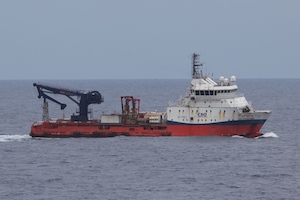
Here is the UT 715 CBO Guanabara, one of a number of this class of anchor-handler, but unique to this Brazilian company. Like most anchor-handlers operating offshore Brazil it is festooned with gadgetry, including two ROV systems together with their launching davits and control cabins and a large crane on the stern. Who knows how many people are required to operate this lot. And for those who are wondering why ships look so scrubby at the waterline these days, it is because modern anti-fouling paint is required not to foul the environment, so there is a lot of marine growth at the air/water interface.

I am surprised to find that I have never featured an Esvagt ship as Pic of the Day on shipsandoil.co.uk, so here is one the Esvagt Capri one of a large number of identical ERRVs or as we continue to know them "Standby Boats". This ship and its sisters have been purpose built for the job and are certified to be capable of providing support for 300 people rescued from an offshore installation in UK waters. This may make you wonder how a single ship could possibly actually rescue 300 people within a time frame that would result in the last being alive at the time when they are dragged out of the water. This question has never actually been answered, so it's "ah yes but..."
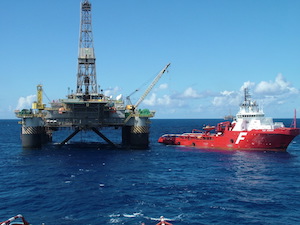
Here is the classic UT722 Far Senior working at the floating production unit P XVII out in Brazilian waters. The ship was built in 1998 and was sent out to Brazil from Europe in 201. It was sold by Farstad to a Russian company in May 2018. The early UT722s were provided with one accommodation deck less than the later versions and so had less windage. The wheelhouse was also set further aft so that it would be better protected from the weather. This ship was also one of the earliest provided with a small crane to assist with anchor handling.