

Back in the old days I used to feature ‘Picture of the Day’, which had started off as a photo of a ship passing our office on the north side of Aberdeen Harbour and then I began to feature photographs taken by other marine photographers from all over the world. It was an interesting presentation which seemed to please the followers of offshore vessels, of which there are many.
At about the same time I initiated a webcam of the entrance to the harbour, for a while controllable by the viewers. It had a patchy history. Sometimes after heavy rain it could be seen limp, in its little bowl submerged like a dead goldfish. At other times it was adversely controlled by someone out there. No matter who did what, the camera would be positioned face down onto the car park. Who did this? What sort of idiot would spend their entire time sabotaging other people’s innocent pleasure. Looking back, it seems likely that it was some-one on watch somewhere, with very little to do.
Even when I had given up constantly posting photos on the website, having retired to Spain and gone on to writing novels, I still used to receive photographs from a few people, and was able to use some in my professional work which I was still occasionally undertaking. And, finally, I was down to receiving photographs from one man, Captain Jan Plug who worked for Subsea 7 and its forebears. I was not actually using many photos, but I still saved them so I am making a bit of a montage of some of them for the enjoyment of my many readers.
The first photo in my record is one of the VOS Paradise, an early XBow platform ship, which came from China I think. This photo was taken from shoreside in Ijmuiden where jan lives. He was at the time working on the Seven Waves in Brazil.

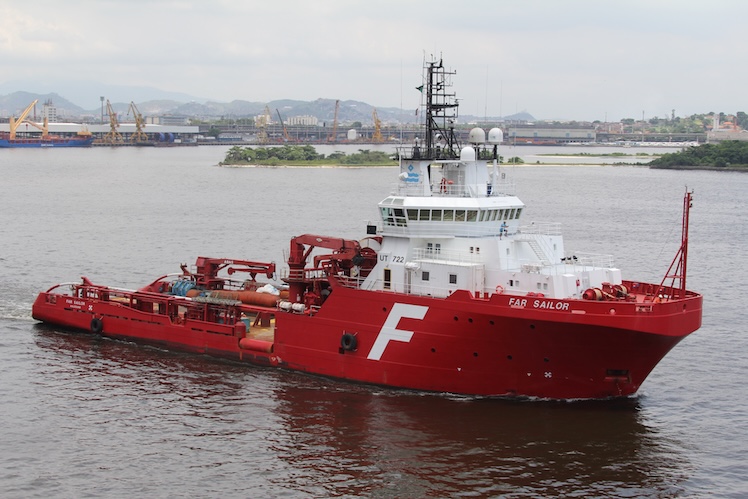
Out in Brazil he was photographing what were mainly European offshore ships transported out there to fulfil the unlimited requirements of the Brazilian national oil company. There seemed to be no limit to their requirements. Here is the Farstad ship Far Sailor, one of the wonderful UT722s, possibly, in my view, the ultimate mobile unit support ship.
Back on leave in Ijmuiden Jan caught the curious old ship the Putford Puffin a strange old craft which had been an air diving ship back in the 1980s but had become a standby boat during one of the periods when shipowners would convert anything.

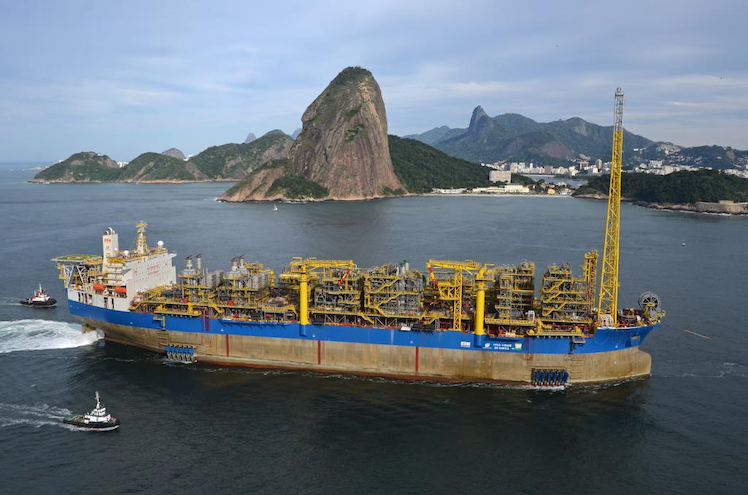
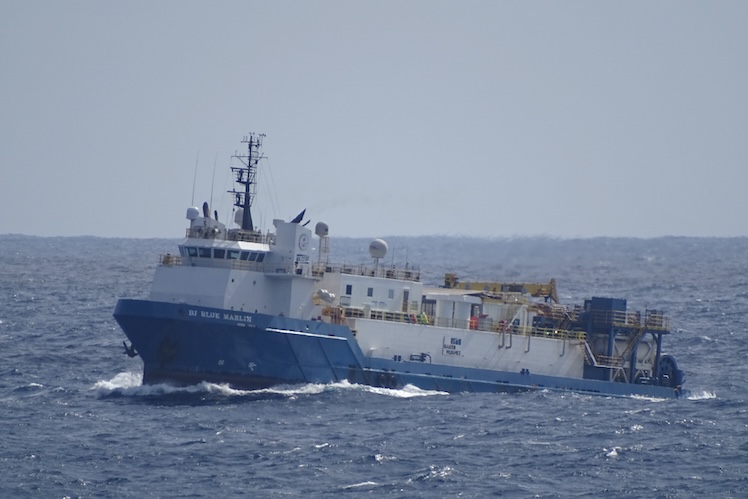
Back in Brazil Jan had joined the Seven Rio, and later we’ll get photos of one or two of these amazing vessels. But this trip he captured an FPSO on its way to work. The Cidade de Maricá, and also amongst his many snaps the well stimulation vessel Blue Marlin. You can see that this ship had once been a OSV, but with the addition of tanks for noxious fluids and high pressure pumps had become a well stimulation ship. Even today a rare animal in the panoply of offshore vessels.
Almost uniquely out there in Brazil more and more very large ships were employed to lay offshore flexibles, flowlines to take oil from the wellheads to the FPSOs. They were a product of the move forward in oil field development, where mobiles drilled individual wells which were connected on the surface to central processing. And for those who don’t know, it was not always like that. Anyway here is an example the Seven Sun.

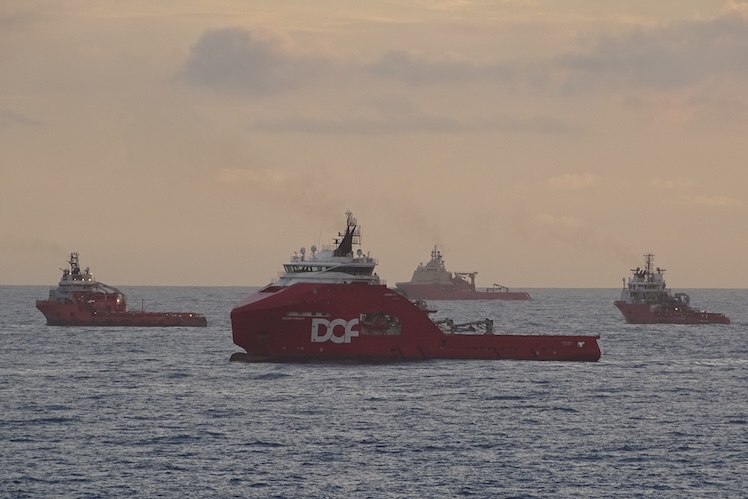
In addition to the pipe layers Petrobras also employed some of the most potent anchor-handlers in the world and Jan got photos of them. Here is the Skandi Paraty in the same frame as three other older anchor-handlers. It had just entered service in 2017 and had a bollard pull of more than 300 tonnes.
Out in Brazil the flow line layers get more and mor exotic. And courtesy of Jan we get to see some of them out there. Here is the Sapura Topaz.

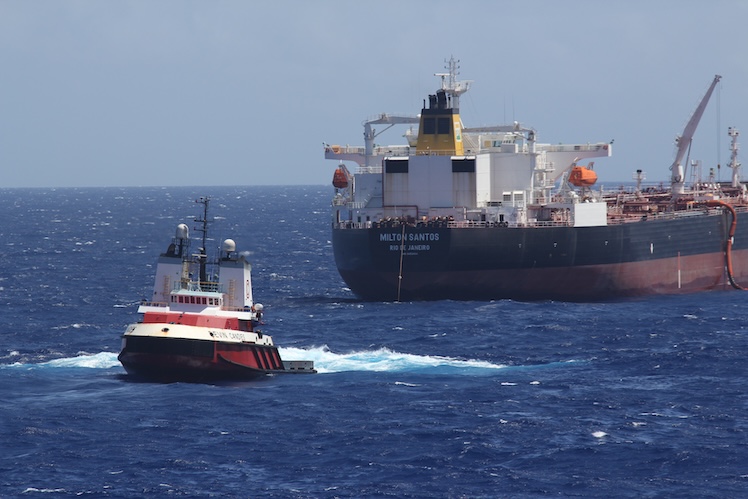
Still in Brazil in 2018 on the Seven Rio while engaged in some survey work in the vicinity of an FPSO Jan was able to photograph the Devin Candies, an American tug engaged in heading control, an activity much required in order to prevent the offtake tankers snaking all over the place and causing unacceptable tensions on the connections to the FPSOs.
And back in Vitoria he photographed the Seven Waves, with its new pipelay tower, still to be painted, loading flexibles alongside. Many of Jan’s photos include interesting backgrounds, as does this one.

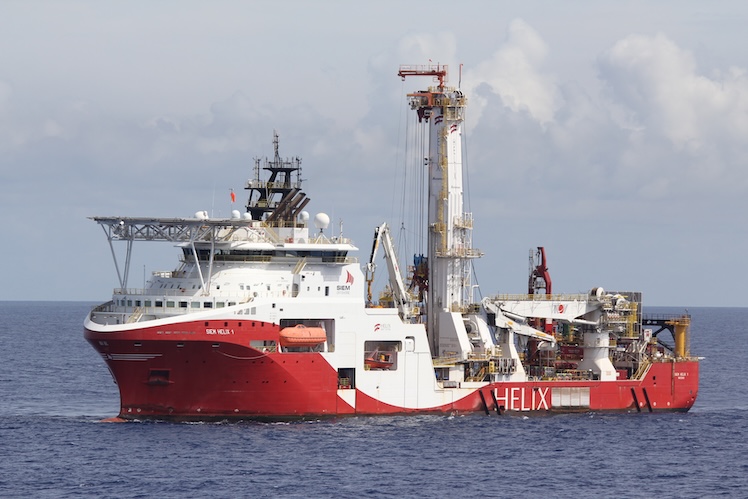
Out in the ocean in the Campos Basin here is the Siem Helix, apparently engaged in well intervention work. This is a ship which I seem to remember was out there at the site of the loss of the Deepwater Horizon back in 2010.
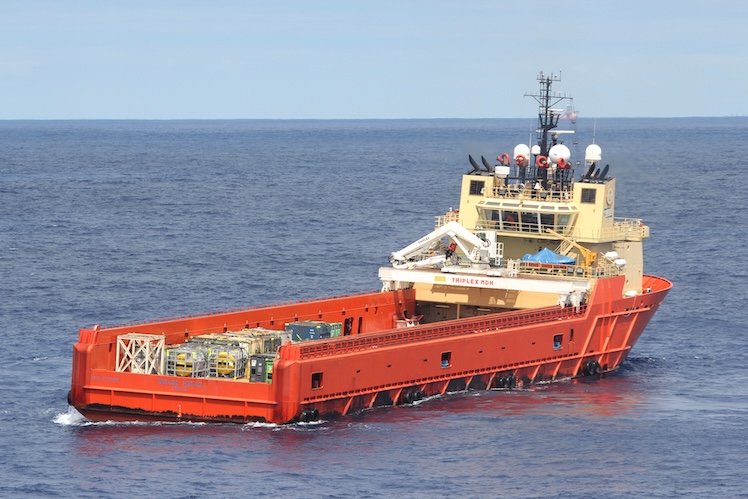
Jan took many photos of what we might call normal AHTS and PSVs. Here is one, the Bran Hero, operated by a Brazilian offshoot Edison Chouest. This one looks as if it has a deck area of about 1000 m2 and was built in Brazil. Unusually for a platform ship, it is fitted with a Triplex MDH which is a system for handling stuff on the deck. You can see that it is a crane mounted on a gantry system which can run up and down the ship. It appears to be a special PSV system, but what possible use can it be?
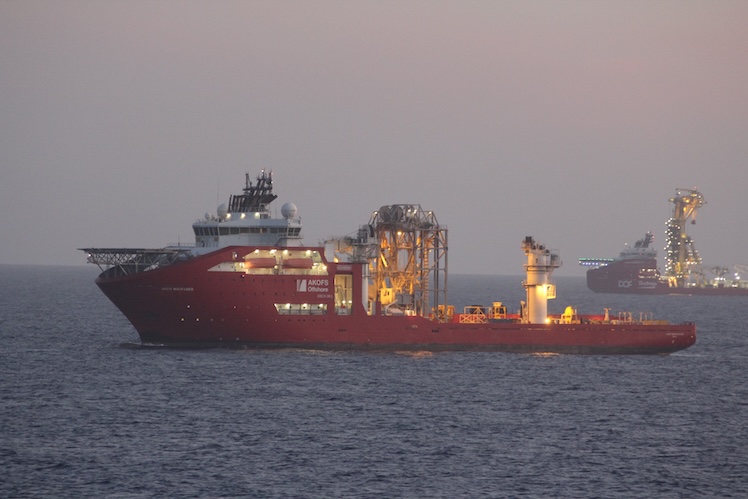
In January 2019 Jan was still working out there and still sending pictures. By this time Brazilian mailing lists had picked up my email address and added me as a ship owner. Hence for years I have been receiving CVs for Brazilian seafarers, and now advertisments for all sorts of Brazilian services. But here is a photo anyway. The Aker Wayfarer and Sapura Jade in the evening.
The is a lot of marine stuff out there in the Campos Basin and elsewhere offshore Brazil including a number of modern drill ships. Jan brought some of them to us, including the Norbe IX seen her unloading pipe of some sort from a platform ship the Zarapito and another platform ship just visible doing something on the other side.

And in port here is the Amazon Chieftain which was once a Maersk ME606 I think, apparently it was new in 1990. As Jan says ‘does not look like its going to go to sea any more’. And another the Porto in Niteroi
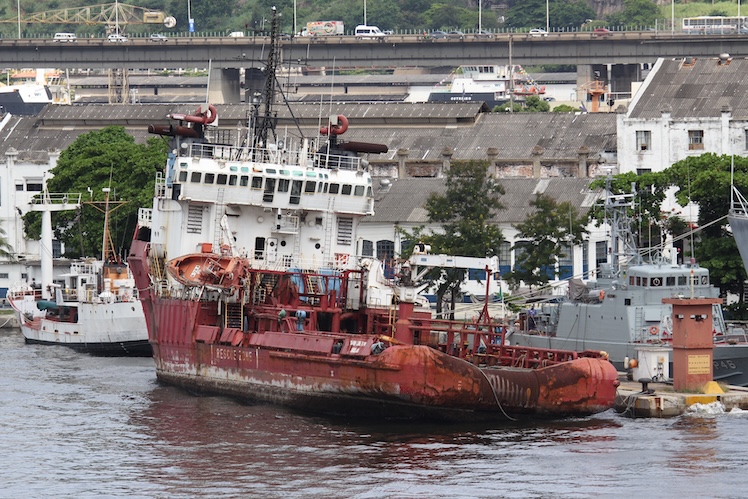

And if you had any doubts at all about where Jan was working here is the Seven Cruzeiro in Rio.
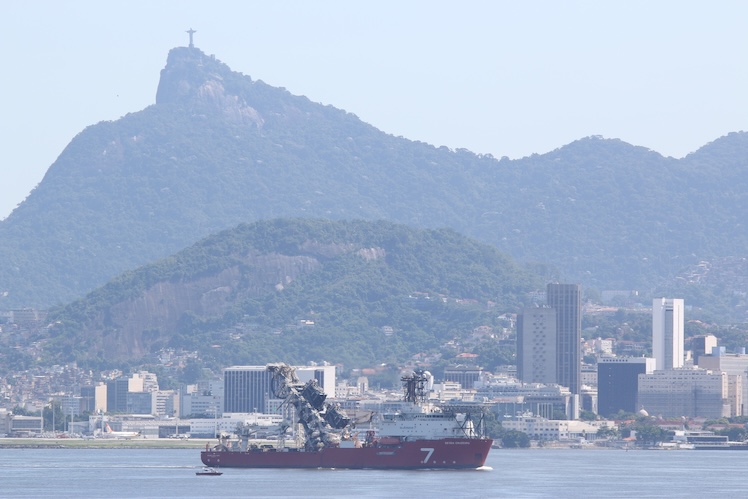
A mystery ship the Sealoader 1, which is supposed to be an interface between an FPSO and a normal tanker. So that no expensive DP is required for the offtake vessel. Since there is also a Sealoader 2 one assumes that the ship is successful.

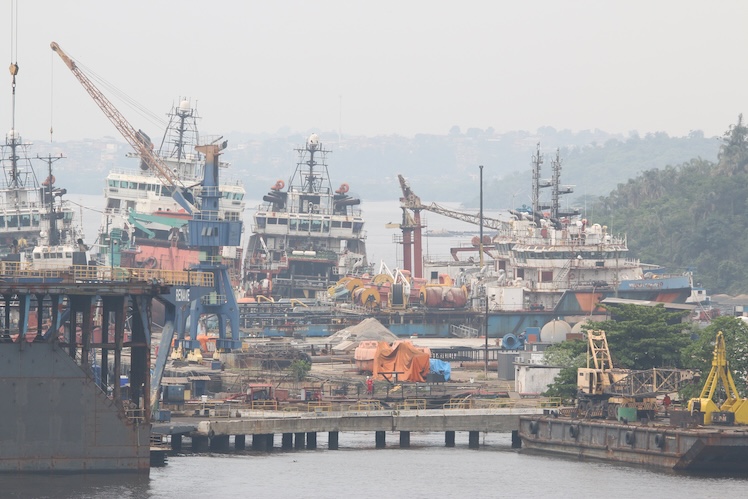
If have ever wondered where old supply boats go to die, Jan has provided us with an answer. Here are some dead offshore vessels at the Renave shipyard in Niteroi. And I can’t help adding yet another of Jan’s composites, this time the Comorin Base. They are operators of small craft in Brazilian waters.

At the end of 2020 ere is another stunning pipelayer the Sapura Onyx leaving Niteroi. Note all the bridges in the background.

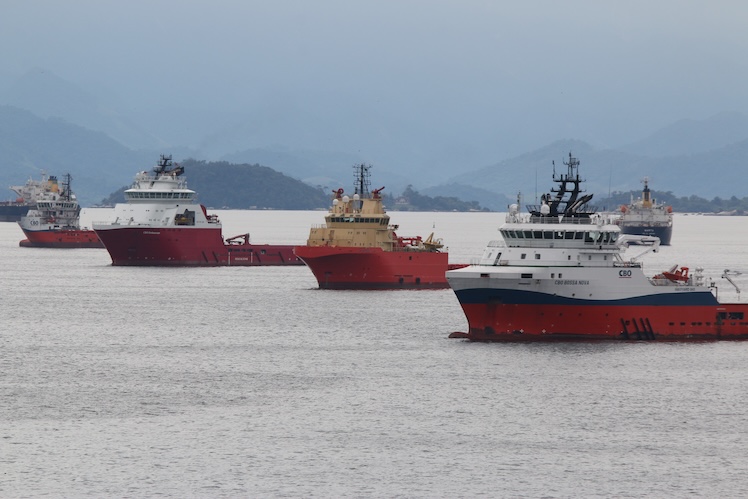
And as time passes and we see more and more offshore vessels in Brazilian waters we might be wondering what they are actually up to. Does Petrobras accumulate more and more of them, demand that they be crewed by Brazilians and then eventually discard them when they don’t go any more. It does take quite a bit of maintenance to keep these things going. And when they are new, alarmingly, even more expert input is required. So here are a few at anchor waiting for something nice to happen to them in April 2021 in Guanabara Bay.
Jan has a knack of photographing the unusual. Here is the semi-submersible Lone Star entering Rio under its own power. I spent years identifying risks for a rig owner, and believe me, this is risky.

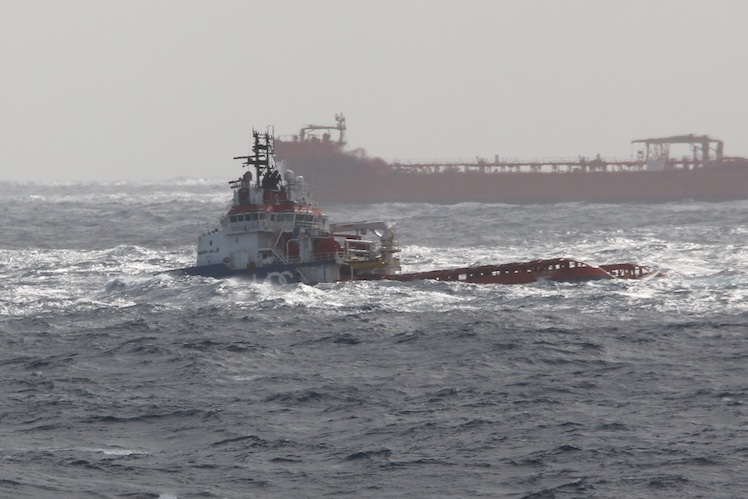
And although calm conditions are generally more photogenic, it does get rough in the south Atlantic as in this photo.
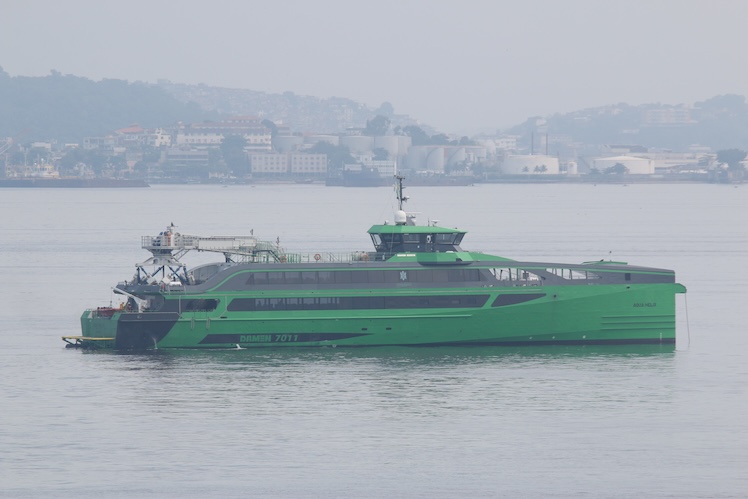
You may remember that in 2023 Damen introduced a new type of mobile access for windfarms, and indeed anything else requiring walk to work capabilities and one quickly found its way to Brazil, to be captured by Jan. Here is the Aqua Helix.
Then in the way of these things Jan was to find himself in the Far East in command of the Seaway Phoenix and we were to receive a succession of photos from Taichung, Taiwan. Here is the Pacific Hornbill alongside what appears to be a container berth.

He seemed to have been working in a wind farm and here is a Maesk cable ship going to sea.

And as usual when new developments take place anywhere in the world stuff from Europe will find its way there. So here is the windmill installation craft the Seajacks Zaratan out there at a wind farm.

And I know what this ship does. It is the Siem Topaz which uses its incredible bollard pull to pull a seabed plough along, making a trench for cables.
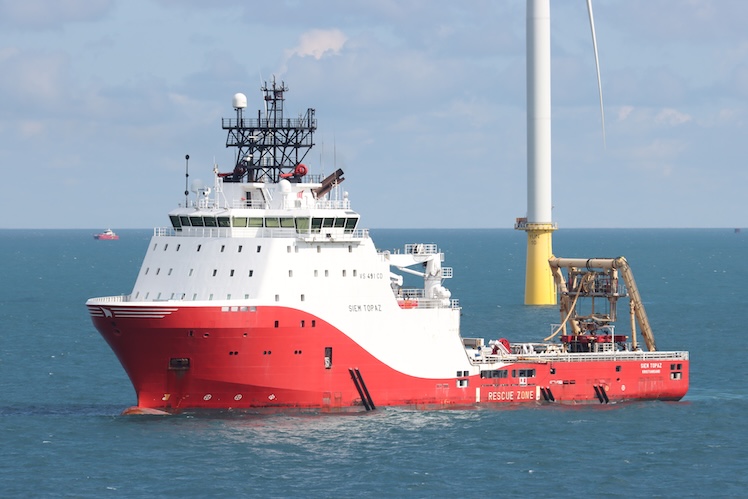
And if you wondered how these windmills were actually put together here is a picture of it happening.

And that’s it. I think Jan has now retired, so he will keep sending out wonderful pictures from the harbour at Ijmuiden. I am moving on so probably will not be publishing anymore on this website, and my input will also be limited. Honestly, I no longer know what all these amazing ships do. But Jan has my thanks for his years of contributions, and I hope that he, and you, enjoy this montage.