

LE BOREAL IN THE FALKLAND ISLANDS

The Le Boreal. Photo Join Leffmann
On November 18th at 2 am a fire broke out in the engine room of the Le Boreal which was on its way to South Georgia as part of its cruise schedule. As a result the captain broadcast a distress message and ordered the evacuation of the total complement of passengers, about 260 and most of the crew of 130.
The sister ship of the Le Boreal, the L’Austral and both military and civilian helicopters based in the Falkland Islands responded to the call. The passengers and crew evacuated in what the media called “life rafts” but which were, if one views the video of the accident which was taken by one of the military helicopters, the two boats which habitually would be used by the ship to take the passengers ashore in places inaccessible to the ship itself. One assumes that they had a capacity for about 200 people. According to the media reports, which are a bit limited, the passengers were required to spend some time on deck before embarking in the boats, and then some remained in them into the afternoon, when it appears that they rendezvoused with the L’Austral in sheltered waters in the north of the Falkland Islands. About 90 passengers were also winched aboard the rescue helicopters.
All made their way in one way or another back to Port Stanley where apparently the locals opened their houses to the survivors to provide accommodation until they could be flown out, back to their countries of origin. The ship itself was towed back to Port Stanley by two small Dutch tugs the Dintelstroom and the Giessenstroom. For a bit of history about marine support in the Falkland Islands have a look at “The Voyage of the Black Pig” in the Features section of the Ships and Oil website.
CELESTIAL NAVIGATION
In a search for some good news I pursued a news report that celestial navigation is back – that is at least at the US Naval Academy in New London, Connecticut. And apparently in the US Merchant marine Academy in New York they have never stopped teaching celestial navigation. The reason for the reappraisal of the navigation process is the fact that GPS is vulnerable to attack and without it ship all over the world would be wandering aimlessly on the high seas, that is unless somone out there has a sextant and the tables and the Nautical Almanac, and the ability to take a sight and plot the ship’s position without computer assistance. The news item caused me to wonder what had happened to the navigation satellites which used to wander about in the heavens and which were capable of being interrogated to reveal the positon on the earth’s surface of a vessel suitably equipped with the right sort of receiver – known as “satnav” . Well, even without satnav as long as you have a sextant and the books and the training you’ll be OK, although there are hazards. You do need the celestial bodies and a horizon which is probably fine in the Pacific but can be a challenge in the North Atlantic where a ship leaving UK could approach the coast of North America without seeing anything.
A CATALOGUE OF DISASTERS
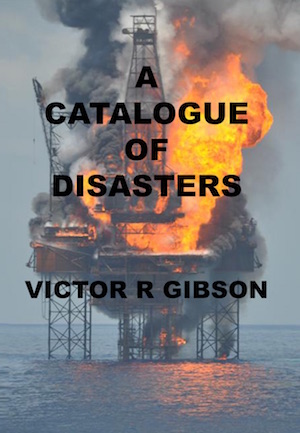
I may be going to bore my readers a bit for the next month or two as my book, “A Catalogue of Disasters” becomes available. I was prompted to write it after coming across a description of the loss of the Danny FII in a book written by a journalist who had travelled to the Far East on a Maersk container ship. This was in Waterstones. And in addition having been a safety case compiler for 20 years I felt I could use my experience to help those in the business who are still grappling with the problem of keeping people safe.
This will be critical when the operators of mobile units start to recruit again, as they surely will, and are put in the position of having to train people to do the jobs which others, now not available, used to carry out. I was a casualty of the 1986 downturn myself, only returning to ship driving for three months in 1994 during a brief period of unemployment as a technical author.
I have identified 29 accidents encompassing most of the threats experienced by offshore units, mostly reviewing the reports of the formal investigations and summarising them. The result extends to 384 pages, and I hope I have identified the salient points of each accident and have presented them in a way which will be helpful to those operating and administering offshore units. It is to be £65 a copy. Email me if you are interested in a copy. Now available as a PDF for £10
THE MARINE ELECTRIC ACCIDENT

A T2 just the same as the Marine Electric before its modification.
On the morning of 12th February 1983 the bulk carrier Marine Electric sank in extremely rough weather close to the Atlantic coast off the state of Virginia, USA. The loss was investigated by the US Coast Guard and became the subject of a court case, a book written in 2003 and a film on the History Channel. The investigation report ran to 180 odd pages and took the owners, the US Coast Guard and the classification society, ABS, to task for their failure to recognise that the ship was seriously deficient in its ability to undertake ocean voyages. Some would consider that this described it as “unseaworthy”. This short article will only review that aspect of the accident.
The Marine Electric had originally been a T2 tanker which had entered commercial service as the Musgrove Mills in 1947, having been built in America in 1944. Historically the T2 was a ship type built to transport petroleum products across the Atlantic during the second World War. They were typically constructed in the amazingly short time of 70 days. In 1962 the ship was converted for its new role as a bulk carrier at the Bethlehem Steel Company. This meant cutting out the centre body of the ship and inserting a five hatch mid section which had been built at Bremer Vulcan Germany and towed across the Atlantic, hence retaining the bow and the stern, and moving the centre housing, including the bridge, aft. The ship was registered in Wilmington, Delaware and was operated by Marine Transport Management Inc.
The hatches of the new mid section were protected by MacGregor single pull hatch covers, formed from six steel panels which spanned the width of the opening. It was therefore possible for a wire to be attached to the most distant panel from the winch and then for it to be heaved away, the covers would then run along the coaming towards the winch at once over the end would tip into the vertical position. Therefore to close the hatches the crew would attach the wire and tension it up. The panels would run off the rails and take up a horizontal status and run on their wheels along the coaming until all were in position and closed up. The crew would then lower the wheels dog down the sides and walk across the hatches hammering the wedges across which would in theory pull the joints together.
The ship was employed in the carriage of grain, latterly between America and Israel until 1982 when it was contracted to carry coal between ports on the east coast of America and the Brayton Point Power Plant, thereby making it a home trade vessel.
The report states that when the Marine Electric had been employed in the carriage of grain it was the usual practice to seal gaps between the hatch panels using tar paper and sealant, to keep the grain dry. And the report focuses on the repairs and inspections which had been carried out on the ship between 1981 and 1983, particularly the use of “doublers”. Doublers are steel plates which are used to cover holes in the structure. This is as an alternative to cropping the wasted metal out and welding in new sections, and they were used extensively in the attempts of the owners to maintain the watertight integrity of the Marine Electric. Indeed the report described virtually every doubler welded onto the hatches or the deck of the ship, and finally enumerated the numbers used, ranging in size from a few centimetres to three or four metres in length and one wide. In the end there were 400 doublers on the main deck and the hatch covers. There were also a number of holes in the deck and the hatches which were made watertight with epoxy resin similar to that used the repair car bodywork.
Anyone who has worked with MacGregor hatch covers can testify that they have a tendency to come off the rails, and sometimes require jacks and cranes to get them back into position. The distortion of the covers after a major repair had resulted in the crew working all night to get them to seat and achieve a level of watertightness.
The investigators therefore suggested that essentially the ship was unseaworthy and that the permanent master, who had been on leave at the time, should be prosecuted for taking the ship to sea in that state.
The report then goes into the inspections which were carried out and the intervention of the ship’s officers. Both Coast Guard and class (ABS) inspections were carried out during the last two years of the ship’s life. During the Loadline Inspection which took place in February 1982 the Chief Mate pointed out to the ABS surveyor “the doubler plates, epoxy patches and taped over holes in the hatch covers” but the surveyor’s report stated that the hatches were in a satisfactory condition. The ABS records also showed that a hose test had taken place on the hatches in 1980 when this would have been an impossibility. This was afterwards identified as a misprint.
The investigators concluded in the report that ABS were less than independent, since they were being paid by the shipowners – as class still are – and therefore if the owners did not like what they did it would be an option for them to change to another class society – as they still can. This they said would result in a conflict of interests. However, interestingly for those studying the event today, the Coast Guard Admiral who signed off on the report disagreed with this conclusion and stated that ABS were a fine expert independent body who would not be influenced by the source of their remuneration.
So in the end what can we say that the Marine Electric was falling to bits and everybody who had anything to do with the ship was aware of its state. The crew apparently thought that if it all went wrong they would be rescued because they did not go far from the shore. In this their confidence was also misplaced and all but three of the 34 man crew died of drowning or hyperthermia.
OFFSHORE SHIP LAYUPS

World Diamond. Photo Scott Vardy
In the interests of my general readership I have been trying to avoid getting too involved in the low oil price and the resulting reduction of offshore exploration, but it is time to give the problem a bit of space.
A typical casualty is World Wide Supply who entered the industry a couple of years ago with six platform ships built by Damen in Holland. By today’s standards these are moderately sized ships of an interesting design, featuring Damen’s answer to the wave piercing bow. They had two ships on the European spot market and four ships working for Petrobras and now, they have only two ships working and they are not making enough money to pay back the interest on their loans.
Back in 1986 during a previous downturn numerous ships ended up being owned by banks who then put them out to management, and eventually sold them back into the industry as things improved, but it is unlikely that such a solution is available today. A combination of a buoyant oil market, cheap Chinese construction and very low interest rates has resulted in a glut of offshore vessels, for which work might not be available even in good times. So it appears that lenders will have to grit their teeth while older tonnage makes its way the breakers and equilibrium is reached.